
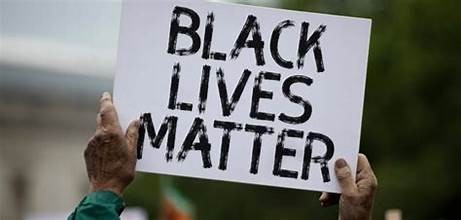
June is Black Lives Matter Month. This month is an opportunity for all Americans to make a stand against racism and racially-motivated violence. It is important for the Church and Christians to acknowledge this sacred confession.
In Luke 10:25-37, Jesus tells a scandalous story. A man is beaten and left for dead, and while a priest and Levite pass him by, it is a Samaritan (one who was perceived as a despised enemy of the Jews) who stops to show the man mercy. When Jesus asks the lawyer in the story, “Which of these three was a neighbor?” the lawyer answers, “The one who showed him mercy.” He can’t even say the word Samaritan. That’s how deep his bias runs.
We often refer to the Samaritan as the Good Samaritan. And yet, it is interesting to note that Jesus never calls the Samaritan good. Many Bible versions have added the phrase The Good Samaritan at the top of this section. Calling the Samaritan good is reflective of a Christian history that buys into the racialized and ethnocentric judgment that Samaritans are bad. It demonstrates a contradiction. This Samaritan did not act like a Samaritan was supposed to act. This bias argues that the Samaritan stepped out of his typical bad Samaritan ethic to embody a good Judeo-Christian ethic. The same distorted conjecture going on with the phrase Good Samaritan is at work in the phrase white trash. White trash is also used to describe a contradiction, i.e., white people who do not behave as white people are supposed to behave. White supremacy justifies racist stereotypes against Black and Brown people. However, those same racial stereotypes do not prevail for white people, thus leading to the phrase white trash.
Perhaps we call the Samaritan good because we assume the opposite. Jesus refuses to play by those ethnocentric and racialized assumptions. Instead, he lifts up the one who is hated and says: Learn from him. See God’s actions in his actions.
This is why churches should honor Black Lives Matter Month. Not because Black lives matter more, but because, like the Samaritan, they are often the ones passed over, vilified, and left in the ditch by society and by the church, yet they embody the presence of God. Saying “Black Lives Matter” is no more exclusionary than Jesus naming a Samaritan as the hero of the story. In fact, it’s Gospel truth.
James Cone puts it plainly:
“Any message that is not related to the liberation of the poor in society is not Christ’s message. Any theology that is indifferent to the theme of God’s liberation of the poor is not Christian theology… It is not Christian theology. Period!” (Said I Wasn’t Gonna Tell Nobody)
“Black Lives Matter” sticks in the throat of those who haven’t examined their prejudices, just like “The Samaritan is my neighbor” stuck in the lawyer’s throat. “All lives matter” is safe, easy, and vague. But the Gospel is not vague. It is precise. It names the marginalized. It walks with them.
This June, don’t just pass by with silence. Let the church say clearly and without hesitation: Black Lives Matter.
Because Jesus didn’t say, “All people are neighbors.” He said, “The Samaritan is your neighbor.”
Let the church say, Amen.
