
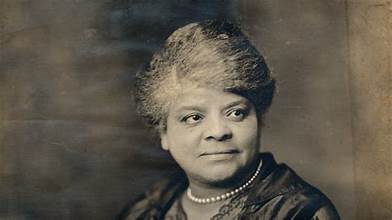
During Black History Month, we remember that faith has often shown up not only in sanctuaries, but in the streets, the newspapers, and the hard work of telling the truth. Ida B. Wells answered that call publicly. She confronted the terror of lynching head-on and named the deep moral contradiction of a nation that claimed Christian righteousness while allowing the violent destruction of Black lives. In Crusade for Justice, Wells declared, “Our American Christians are too busy saving the souls of white Christians from burning in hell-fire to save the lives of Black ones from present burning in fire kindled by white Christians” (Wells, 131). Her critique exposed a form of Christianity more concerned with abstract salvation than with the protection of Black bodies.
Wells challenged a theology that separated soul from body and belief from action. For her, salvation that ignored physical safety, freedom, and dignity was not salvation at all. True belonging, she understood, requires more than spiritual language. It requires liberation from bondage and violence in real, embodied ways. Importantly, Wells was not only speaking to the church or within it. Her words were directed at the whole of American society, a society shaped by white supremacy and moral hypocrisy. She called everyone, especially those claiming the name of Christ, to account.
In The Cross and the Lynching Tree, theologian James Cone reminds us that Wells’ courage was sustained by her faith, inherited from her formerly enslaved parents and nurtured within the Black church. It was a faith shaped by the cross and by Black resistance to white supremacy, a faith that held her steady even when her anti-lynching work put her life at risk and when some in her own community distanced themselves from her. The Black church affirmed her dignity and worth, and that sense of belonging propelled her beyond the church walls and into the public struggle for justice.
Ida B. Wells teaches us that belonging is never meant to stay contained. When it is real, it spills outward, challenging systems of oppression, defending life, and affirming the full humanity of those the world tries to erase. Her life stands as a reminder that faith and action are inseparable, and that the work of justice is holy, sanctified work. During Black History Month, we honor Wells not only as a journalist or activist, but as a witness to a faith that insists Black lives, and Black bodies, truly matter. Amen.
