In this season of Easter, we are reminded that the Good News of Easter isn’t just celebrated for one day. Jesus’ death on a cross was not just a historical event, but deep with theological meaning. In Christ, we are named as God’s own forever. In Christ, we are adopted into the family of God. In Christ, we are forgiven of our sins. In Christ, we are transformed from sinner to saint. In Christ, we are given eternal, unending life. The resurrection of Jesus was a bodily resurrection. In the resurrection, we see that death does not have the last word. We see that our salvation does not offer resurrection only for our Spirits but also for our bodies. In Jesus’ resurrection, he was not a disembodied soul, but a resurrected body. In our resurrection, we will be resurrected bodies as well.
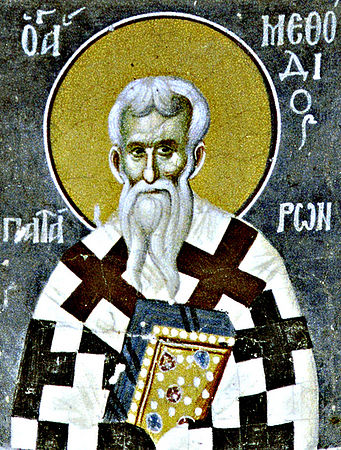
Christian Bishop and early church martyr, Methodius of Olympus, refers to the resurrection as a reforming of our bodily material. He uses the example of a piece of marble and a statue. God, like the sculptor, takes our beautiful bodies and reforms us into something even more beautiful. This is why many in the early church were against cremation. They wanted to honor the body, so they buried it as it waited for the resurrection. Cremation for many years was seen as a sacrilegious act, declaring a disbelief in the resurrection of the body. They wanted to keep their body whole, so God would reform it into a resurrected body. However, God is indeed able to form ashes into resurrected bodies. In Genesis 3, God forms Adam out of the dust.
Taking the resurrection seriously means affirming that there is a “bodiliness” to the resurrection. God is restoring all things, which includes our bodies. The good news of Jesus is not just for our spirits but our bodies as well.
Amanda Berry Smith understood this sacred reality. Her life gives us additional insight into the bodily resurrection of Jesus. She was born in 1837 in Maryland as a woman trapped in the violence and coercion of slavery. Through great effort, her father was able to buy his own freedom and eventually paid for the freedom of his wife and children. The family then settled in Pennsylvania.
In 1868, she experienced, in her words, “the joy of the Lord,” which she articulated as a classic Wesleyan entire sanctification experience. She was ordained in the AME Church and became a traveling evangelist, missionary, and singer. She traveled and preached in India, England, West Africa, and the United States. Amanda Berry Smith soon began speaking at holiness camp meetings. She became best known as an evangelist during the American Holiness movement. Christians heard of the holiness of God and our responsibility to embody God’s holiness on earth. People experienced God’s truth and love clearly in her ministry. Smith proclaimed the Gospel boldly, which led to many people coming forward and experiencing entire sanctification through her preaching and ministry. However, Amanda Berry Smith did not just attend to souls in her ministry, but bodies as well.
After many years of traveling ministry, she moved to settle in Chicago as she was getting older. Throughout her travels, she witnessed discrimination, racism, and began having a passion for those marginalized. Upon arriving in Chicago, she witnessed direct discrimination against Black orphans. She decided she was going to open an orphanage for Black children. In 1895, she began raising money. In 1899, she established the first orphanage for Black children in the state of Illinois.

Amanda Berry Smith embodied the resurrection in her life and ministry. Amanda Berry Smith was not superhuman. She was faithful, faithful to what God had called her to do. Her ministry, like the resurrection of Jesus, did not separate bodies from souls, recognizing that discipling and nurturing both are essential to our call as the people of God.
May we hold fast to the resurrection this Easter season, believing that God is still at work, breathing new life into the world today. And may this sacred truth influence lives and ministries, not diminishing the value of bodies, but working to strengthen the connection between bodies and souls. Amen.
Pastor Mat
