
On this National Day of Racial Healing, we pause as the people of God to acknowledge both the wounds of our past and the hope of our future. Healing begins not with avoidance, but with confession. It begins with the courage to name the sin of racism, the harm it has caused, and the ways it continues to traumatize our communities. The church is called to be a place where truth is spoken in love, where repentance leads to transformation, and where Christ’s sanctifying power becomes visible among us.
The Church of the Nazarene’s manual affirms,
“we renounce any form of racial and ethnic indifference, exclusion, subjugation, or oppression as a grave sin against God and our fellow human beings. We lament the legacy of every form of racism throughout the world, and we seek to confront that legacy through repentance, reconciliation, and biblical justice. We seek to repent of every behavior in which we have been overtly or covertly complicit with the sin of racism, both past and present; and in confession and lament we seek forgiveness and reconciliation. Further, we acknowledge that there is no reconciliation apart from human struggle to stand against and to overcome all personal, institutional and structural prejudice responsible for racial and ethnic humiliation and oppression. We call upon Nazarenes everywhere to identify and seek to remove acts and structures of prejudice, to facilitate occasions for seeking forgiveness and reconciliation, and to take action toward empowering those who have been marginalized.”
This commitment of the Church of the Nazarene invites us to listen to the testimony of those whose faith was forged in suffering, revealing how Christ’s presence has always been found among the oppressed.
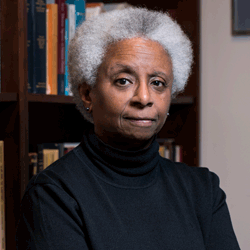 Catholic Womanist theologian M. Shawn Copeland reminds us of the deep spiritual resilience of enslaved people. In Knowing Christ Crucified: The Witness of African American Religious Experience, she says, “The slaves… knew Jesus as a friend with whom they could share their secrets, a savior to whom they could entrust their hopes and fears, a companion with whom they could walk through life’s deep shadows, a healer who could make the wounded whole, a fellow sufferer who knew in his body the story of the lash, enduring with them what was their daily portion.” Their witness calls us into solidarity with all who suffer today. We are to stand with, listen to, and advocate alongside those whose dignity has been denied.
The apostle Paul teaches that “If one part suffers, every part suffers with it” (1 Corinthians 12:26). Racial healing is not the work of a few. It is the sacred responsibility of the whole body of Christ. We confess because confession frees us. We stand in solidarity because Christ stands with the oppressed.
May Bethel Church of the Nazarene be a community where honesty is welcomed, compassion is practiced, and justice is pursued, so that God’s healing might flow from us into the world. Amen.
